
Three Slots, Then Everyone Else
For local searches the map pack sits above every other result. Three businesses get shown. Everyone else is a tap away that most customers never make.
Growth systems for home service leaders
(385) 360-1230
Home Service Google Maps
For most home service searches the map pack sits above every other result. Three businesses get shown. Everyone else is a tap away that most customers never make.




What this includes
The listing is free and most of them are half-finished. Winning the map pack comes down to completeness, category discipline, steady review flow, and the local signals that tell Google you are a real business in this market.
Google Business Profile built out completely, not just claimed
Category and service selection tuned to what you want to rank for
Service-area strategy matched to where you actually work
Review velocity managed as an ongoing ranking signal
Photos and posts kept current, since staleness costs visibility
Competitor and spam listing monitoring in your market

For local searches the map pack sits above every other result. Three businesses get shown. Everyone else is a tap away that most customers never make.
Most profiles are half-finished. Every service listed, every attribute set, current photos, it is one of the very few ranking factors entirely inside your control.
Volume, rating, recency and velocity all move local ranking, and the same signals decide where your Local Service Ads land. Reviews are not a separate project from this one.
You work out of vans across a coverage area. Configured properly that ranks perfectly well; configured carelessly it can suppress your visibility entirely.
Straight from our clients
Home service owners talking about what changed after the marketing started answering for itself. No script, no actors, the people who hired us.
See more client resultsHow the system works
 01
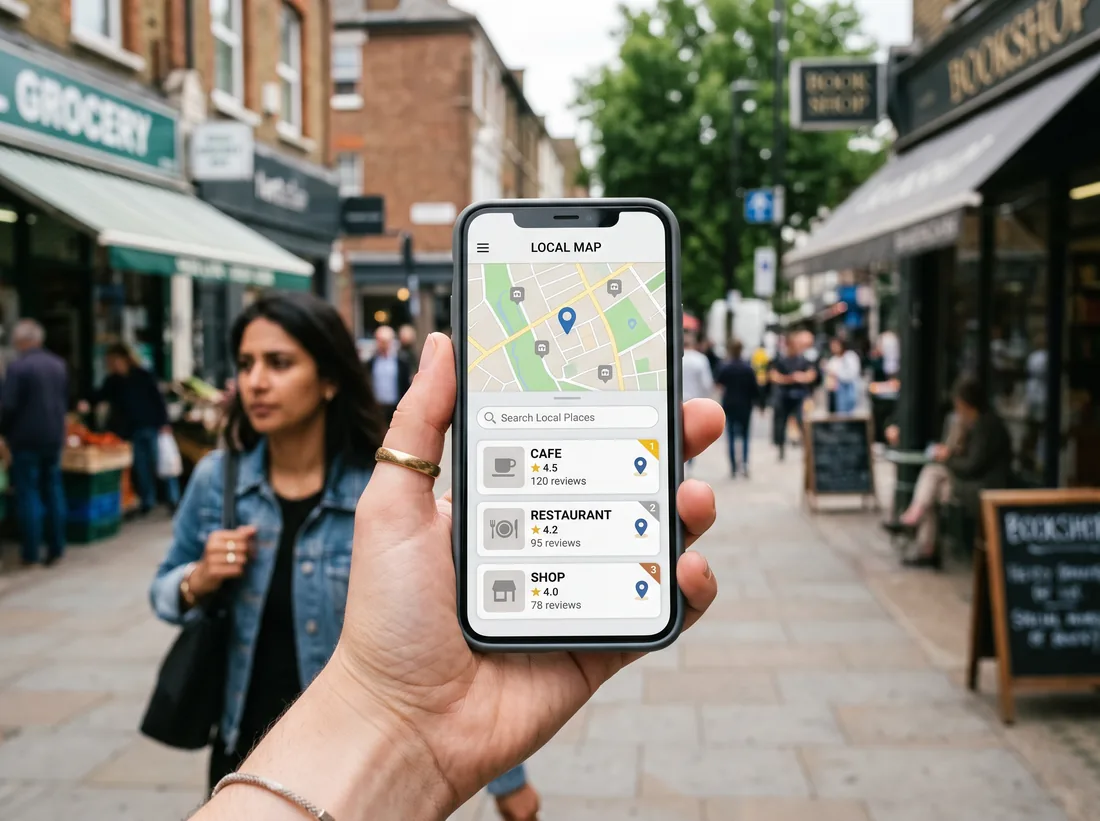
01For “plumber near me” and everything like it, three map results occupy the top of the screen before a single traditional listing appears. On a phone, that is most of the first screen. Winning one of those three positions is worth more than several organic positions below it.
 02
02Most local profiles are half-finished, a primary category, an address, and a phone number. The businesses winning the map pack have every service listed, every attribute set, current photos, and answered questions. Completeness is one of the few ranking inputs entirely within your control.
 03
03Google ranks local results on relevance, distance, and prominence. You cannot move your building closer to every customer, but relevance and prominence are both earned, and service-area businesses have more room to influence results than most owners assume.
The honest comparison
Three ways to run a Google Business Profile. The listing is free either way, the difference is whether anyone treats it as a ranking asset.
Categories and services
Custom Marketing Solutions
Chosen deliberately against what you want to rank for
Photos and posts
Custom Marketing Solutions
Updated on a schedule, because recency affects visibility
Reviews
Custom Marketing Solutions
Requested continuously and every one answered
Questions on your listing
Custom Marketing Solutions
Answered before a competitor answers for you
Competitor spam
Custom Marketing Solutions
Keyword-stuffed and fake listings reported
Service-area setup
Custom Marketing Solutions
Matched to genuine coverage and real drive times
| RecommendedCustom Marketing Solutions | Generalist agency | Managing it yourself | |
|---|---|---|---|
| Categories and services | Chosen deliberately against what you want to rank for | Set once at onboarding and left | Whatever was picked when the listing was claimed |
| Photos and posts | Updated on a schedule, because recency affects visibility | Occasional | Usually stops after the first month |
| Reviews | Requested continuously and every one answered | Sometimes in scope, sometimes not | Asked for when somebody remembers |
| Questions on your listing | Answered before a competitor answers for you | Rarely monitored | Often unnoticed for months |
| Competitor spam | Keyword-stuffed and fake listings reported | Not typically part of scope | Frustrating, and rarely actioned |
| Service-area setup | Matched to genuine coverage and real drive times | Set broadly and left alone | Often set far too wide, which hurts |
Thirty minutes. We will tell you which of the three you actually need.
The process
Where you actually rank across the grid of your service area, and which competitors are beating you in which parts of it. Averages hide this; a grid does not.
Primary and secondary categories chosen against the searches you want, and every service you sell listed as a service instead of buried in the description.
Attributes, hours, service areas, description and a real photo set, the parts almost every listing leaves half-finished.
Requests automated at job completion, so review flow stops depending on anyone in the office remembering to ask.
Photos, posts and answered questions kept current, because a stale profile quietly loses visibility even when nothing else changes.
Grid rankings tracked over time, and listings that violate Google's guidelines reported, which is a real lever in spam-heavy markets.
The part owners find unfair
Google ranks local results on relevance, distance and prominence. You cannot move your building closer to every customer, and that genuinely caps how far one listing reaches. Relevance and prominence are both earned, though, which is why two companies the same distance from a searcher routinely rank very differently.

Profile improvements can affect visibility within weeks, but competitive map rankings are driven heavily by review volume, velocity, and local authority, which take months to build. Markets vary widely, and we would rather give you a realistic read on yours than a generic timeline.
No, but it changes the strategy. Service-area businesses hide their address and define a coverage radius instead. Configured correctly this works well; configured carelessly it can suppress your visibility entirely.
Usually proximity to the searcher, a more complete profile, better category selection, or stronger local citations. Rating is one signal among several, a 4.6 with 200 recent reviews often outranks a 5.0 with 12.
We can report listings that violate Google's guidelines, keyword-stuffed names, fake addresses, duplicate listings, and many do get removed. It is a real lever in spam-heavy markets, though the outcome is Google's call, not ours.
Helpful reading
The next signal is yours